My First Year in the Integrated Preparatory Cycle at CESI: International Student Christ Shares His Experience
On this page :
- A first year in the Integrated Preparatory Cycle at CESI
- Hands-on projects to develop engineering skills
- Student life beyond the classroom
- Christ’s advice to future students
Coming from Cameroon with the ambition of earning an internationally recognised engineering degree, Christ Choumele chose the Integrated Preparatory Cycle at CESI. He looks back on his first year at the Lyon campus, discussing project-based learning, campus life, the balance between academic rigour and personal fulfilment, and the first steps towards defining his career plans.
A first year in the Integrated Preparatory Cycle at CESI
- Why did you choose an Integrated Preparatory Cycle rather than a traditional preparatory program or another post-secondary program ?
My first year at CESI is not my first experience in higher education. After obtaining my baccalaureate in Cameroon, I initially completed a one-year BTS program in Information Systems Management. This program gave me a solid technical foundation, but I quickly felt the limitations of traditional lecture-based teaching, where theory often takes precedence over practical experience.
Two factors prompted me to change direction and join CESI. The first was my ambition to earn an internationally recognised engineering degree, which my initial educational path would not have enabled me to do. The second, and most decisive, was discovering CESI’s teaching approach: competency-based learning. I was looking for an active learning method where I understood why I was learning something and where projects were at the heart of the program. That was exactly what I needed to thrive.
- Why did you choose an Intergrated Preparatory Cycle rather than a traditional preparatory program or another post-secondary program ?
Having already spent a year in higher education, I definitely wanted to avoid returning to a system where theory and practice were out of balance. What convinced me about CESI’s Integrated Preparatory Cycle was, first and foremost, the fact that there is no final competitive entrance examination. Rather than encouraging unhealthy competition between students, the program assesses us on the skills we develop and validate. We are not directly competing against one another: we focus on mutual support, guidance and collective success. This creates a very friendly campus atmosphere, and my experience this year has fully confirmed this.
Unlike a traditional preparatory program, which tends to focus exclusively on subjects such as mathematics or theoretical physics, CESI’s Integrated Preparatory Cycle incorporates practical projects specifically designed to prepare us for the engineering program. This makes the transition seamless while ensuring that we develop strong technical and practical foundations from the very beginning.
- What was your first week on campus like ?
My first week was a huge and very pleasant surprise. At my previous institution, the start of the academic year consisted of a fairly traditional and somewhat monotonous presentation in a large lecture hall. At CESI, I discovered a completely different philosophy. From the very first days, we were divided into small groups, which immediately made it easier to interact with one another. CESI organised workshops, interactive activities and team challenges. It was the perfect way to break the ice. As someone who can be a little reserved at first, this environment helped me quickly get to know the other students, discover CESI’s teaching approach and make my first friends, who are now part of my everyday life.
As an international student, I also particularly appreciated the dedicated welcome sessions designed to help us discover the city and support us with the various administrative procedures. Having a dedicated contact person available to answer our questions or guide us through the formalities is also extremely reassuring. Even though there are around one hundred students in our cohort, working in small groups allows everyone to progress at their own pace and build strong relationships without feeling lost in the crowd. Overall, this induction week was a real highlight and laid the foundations for the friendly atmosphere that defines campus life here.
- How would you describe the workload in the Integrated Preparatory Cycle ?
I was pleasantly surprised by the pace, which I find to be well balanced between academic work and personal life. By joining a leading engineering institution with such an interactive approach to learning, I expected to be completely overwhelmed and have no time left for myself. It is actually quite the opposite. Our timetable often from 9 a.m. to 4:15 p.m. and the way time is organised, including Thursday afternoons, which are entirely free for sports, personal or student association projects, give us room to breathe and pursue activities outside our studies.
That said, the timetable remains demanding and requires a serious commitment. The workload is substantial, but it is intelligently distributed according to the time available. CESI alternates between group work on projects and individual work, such as revision, assignments and reports. During workshops or project phases, we have clear deadlines to meet when submitting our solutions to the problems we have been given. This requires discipline and good self-management, but because the framework is well designed, it encourages us to take responsibility without overwhelming us. It is a pace that allows us to fully commit to our studies while maintaining an excellent work-life balance.
Hands-on projects to develop engineering skills
- Is practical learning already part of the program from the preparatory year ?
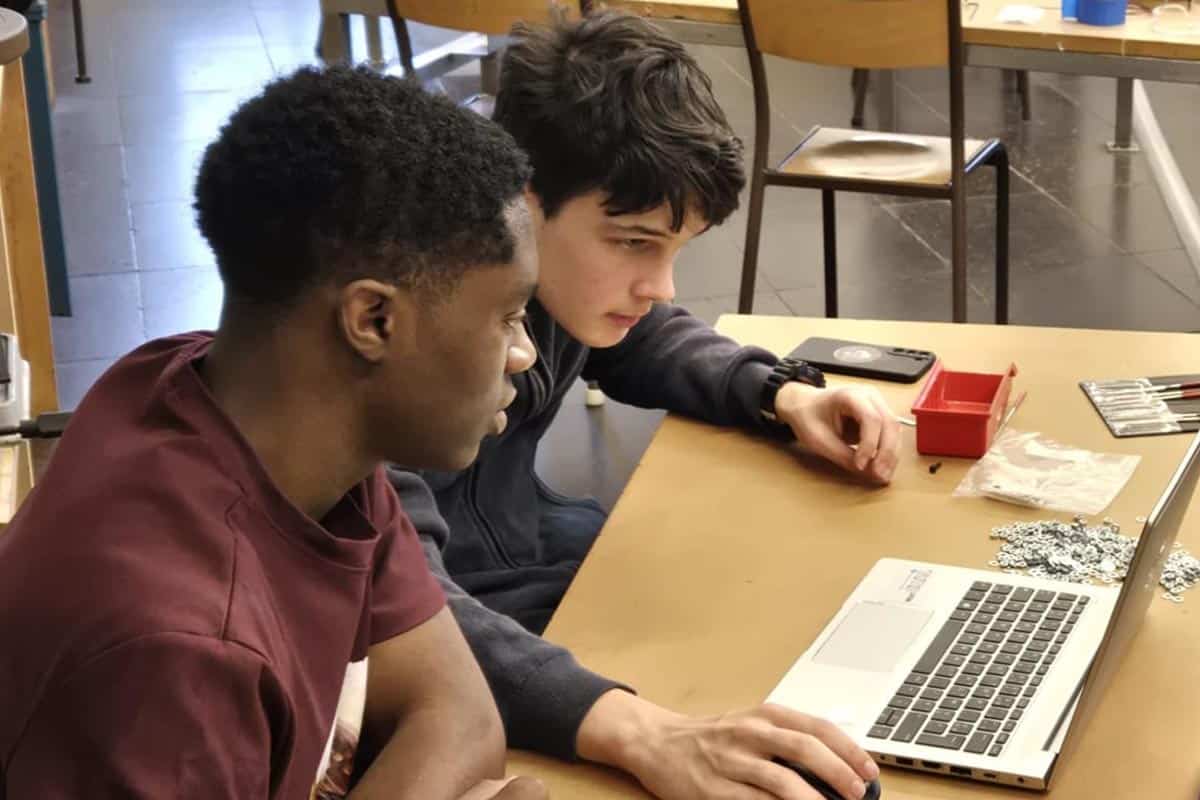
Yes, practical learning is an integral part of the first year, and that is what makes this approach to learning so stimulating. We work on project blocks that generally last four to five weeks. We are divided into small groups of four or five students. It is a complete immersion in an engineer’s day-to-day work: we have to join a team, collaborate and propose viable solutions to a given problem.
What is particularly valuable about the first year is that the projects cover all the majors and minors offered by CESI. This gives us a broad overview before we begin specialising in our second year. Each time, the scenario is highly contextualised. We might be told, for example: “Today, you are signal technicians and you need to analyse and process a specific anomaly,” or “You are a design engineering office and you need to design this product.” We learn by using real professional tools and advanced software such as Python and Fusion 360 for modelling. Teachers are not simply there to deliver a lecture and leave; they work alongside us as facilitators, available to guide us with technical questions or help us understand the tools.
The highlight is the final project presentations. We take the role-playing exercise all the way through, adopting our assigned roles in front of the panel to defend our theoretical approach, but above all to demonstrate our practical solution through models, code and designs. Compared with traditional practical classes in secondary school or other programmes, it makes a huge difference. We understand why we are working and where we are heading, and learning by doing is incredibly rewarding. For me, it is an exceptionally effective approach to learning.
- Which courses or projects made the strongest impression on you this year ?
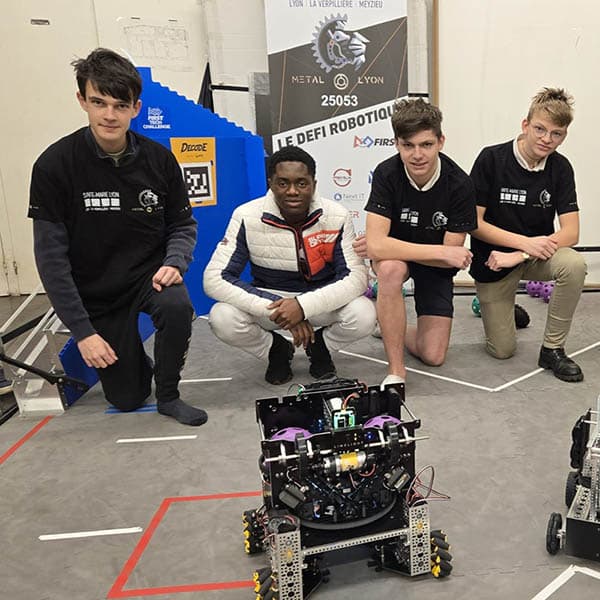
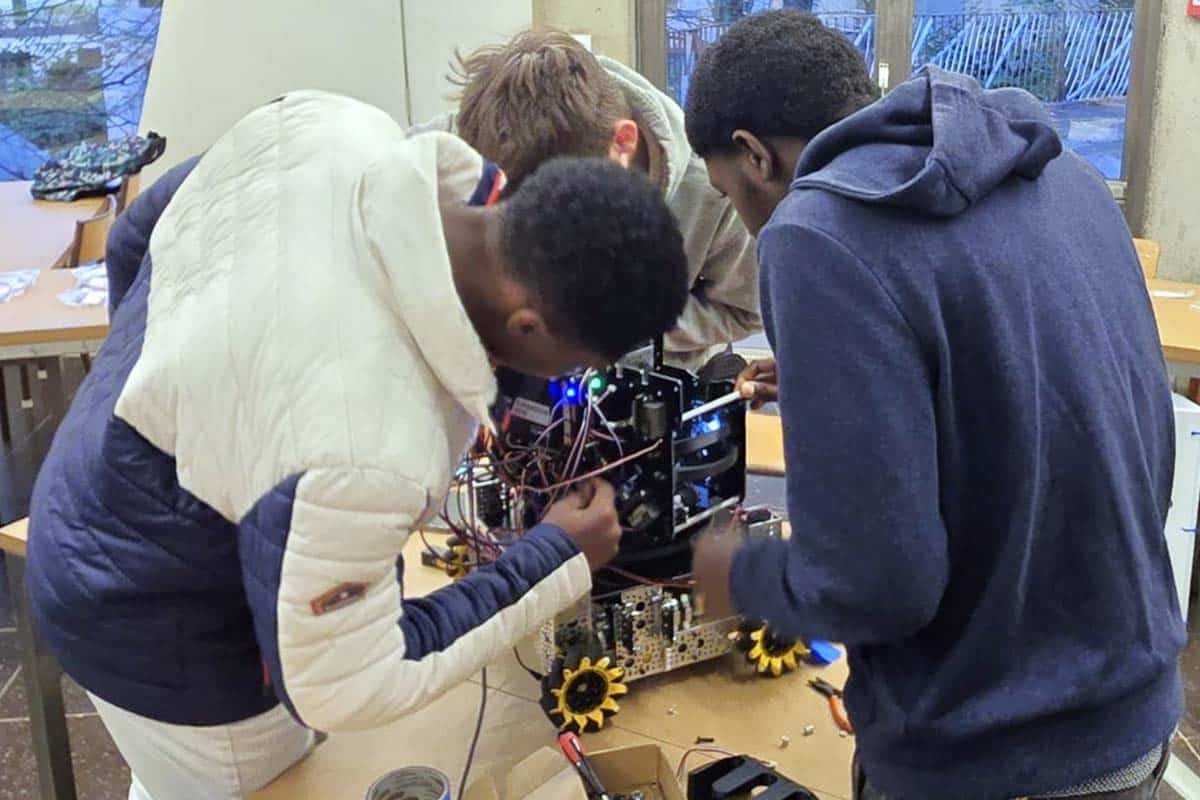
Without hesitation, the project that made the strongest impression on me was my role as a mentor for the Metals Gear Lyon robotics team from Collège Sainte-Marie, as part of the FIRST® Tech Challenge (FTC). I was able to take on this challenge through CESI’s Citizen Engineer module. As someone passionate about computer science, I immediately applied when I saw the opportunity to mentor these young students. It was an exceptional experience, both personally and technically. Faced with challenges involving schedules, mechanics and programming, I discovered highly motivated, inspiring middle and high school students full of creativity and ideas.
Beyond the actual robot design, this project taught me about the realities of managing a team in the field: managing a budget, finding sponsors to support the team throughout the year and finance the following season, as well as planning for the long-term future of the club by training and recruiting the next generation of talent. Our work paid off: the team won the Inspiration Award and the Sustainability Award at the regional competition, as well as third place in the Inspiration Award at the national competition. I was incredibly proud of them, and of what we achieved together !
From a purely academic perspective, the computer science and technical projects I worked on using computers were the most exciting for me. I particularly enjoyed the signal processing project using Jupyter Notebook, as well as database management and migration using SQL, which are very much aligned with my interests. I also really enjoyed working with professional software: 3D modelling and printing using Fusion 360 for our industrial project, and discovering Revit for the construction project. Although the construction sector was not initially my first choice, learning how to use the technical tool was a real pleasure !
Student life beyond the classroom
- How did you settle in with your classmates ? Did you take part in student associations or events ?
I settled in very naturally and smoothly. As I mentioned, the small-group induction week provides an excellent foundation. Then, working together on the different projects throughout the year brings us much closer. We quickly build friendships with people who share the same outlook. While, realistically, we cannot get along with everyone, the overall atmosphere is excellent.
As for student life, I decided to get fully involved by joining the Student Union (Bureau des Étudiants, or BDE). It has been a great experience and a fantastic way to contribute to campus life. When it comes to sport, I am a member of the school’s Sports Association. CESI takes part in university competitions in the Lyon region, but personally, I play football mainly for fun. I am part of the reserve team, which is an ideal section for training without pressure, playing matches with friends and simply unwinding after classes.
One of the highlights of the year was the mentoring evening organised by the BDE. I really enjoyed the concept: we are randomly paired with a mentor from a more advanced year. It is a great way to have someone you can turn to on campus, ask questions about the rest of the program and, let’s be honest, get some valuable advice or even past exam papers to help us prepare!
- Are you able to balance student life with your workload ?
For me, balancing student life and academic work is very manageable. The key is really to follow the academic schedule closely and make good use of the time available during the day. The amount of working time allocated to us at CESI is sufficient to complete most of the required tasks, which prevents us from becoming overwhelmed. Of course, everyone works at their own pace and adapts differently, but if you are organised and disciplined, it is very manageable. The only periods that require a more intense personal commitment and slightly reduce our free time are the intensive revision periods before major submissions.
My only real challenge this year was organising my schedule around the timetable of the students from Sainte-Marie for my robotics mentoring project, so that we could find suitable time slots to work together effectively.
Other than that, the timetable gives me plenty of freedom for my personal activities. After a day of classes, I simply enjoy going out with my friends or unwinding on a basketball court. Picking up a ball, going to shoot some hoops and playing with whoever is there is my ideal way to have fun and relieve stress. This flexibility is what makes the CESI experience so rewarding: we can fully commit to our studies without having to sacrifice our social lives or passions.
Christ’s advice to future students
- What are your career plans, and how has this first year helped you shape them ?
Throughout the projects I worked on this year, it became clear that my interests lie in computer science. More specifically, I would like to specialise in development related to Artificial Intelligence and Data. This is a field I am passionate about, and I would very much like to combine it with robotics. Ultimately, my ambition would be to develop innovative technologies and, in the long term, start my own company.
My first year at CESI has been an excellent springboard. Through mentoring the robotics team, I gained a better understanding of the different factors that influence an engineering project: technical considerations, of course, but also financial management, budget allocation and team management. The courses have enabled me to gain experience with essential tools that will be valuable throughout the rest of my studies. Finally, this year has taught me to manage my time rigorously in order to achieve ambitious objectives within strict deadlines, while also understanding how important it is to preserve my student and personal life in order to remain effective.
- What advice would you give to a future student ?
My most important piece of advice is to find the right balance between your studies and student life. CESI is a leading engineering institution, and the pace requires discipline and respect for clearly defined deadlines. To avoid falling behind, you need to deal with each task as it comes, stay fully engaged on a daily basis and do your best not to let work pile up. If you stay on track and remain organised, you may find the workload surprisingly manageable.
Beyond that, trust the spirit of the campus community. You will have the opportunity to meet wonderful people, interact with students from a wide range of backgrounds and build genuine friendships within the CESI community. Stay disciplined in your projects, make the most of campus life, and everything will fall into place!